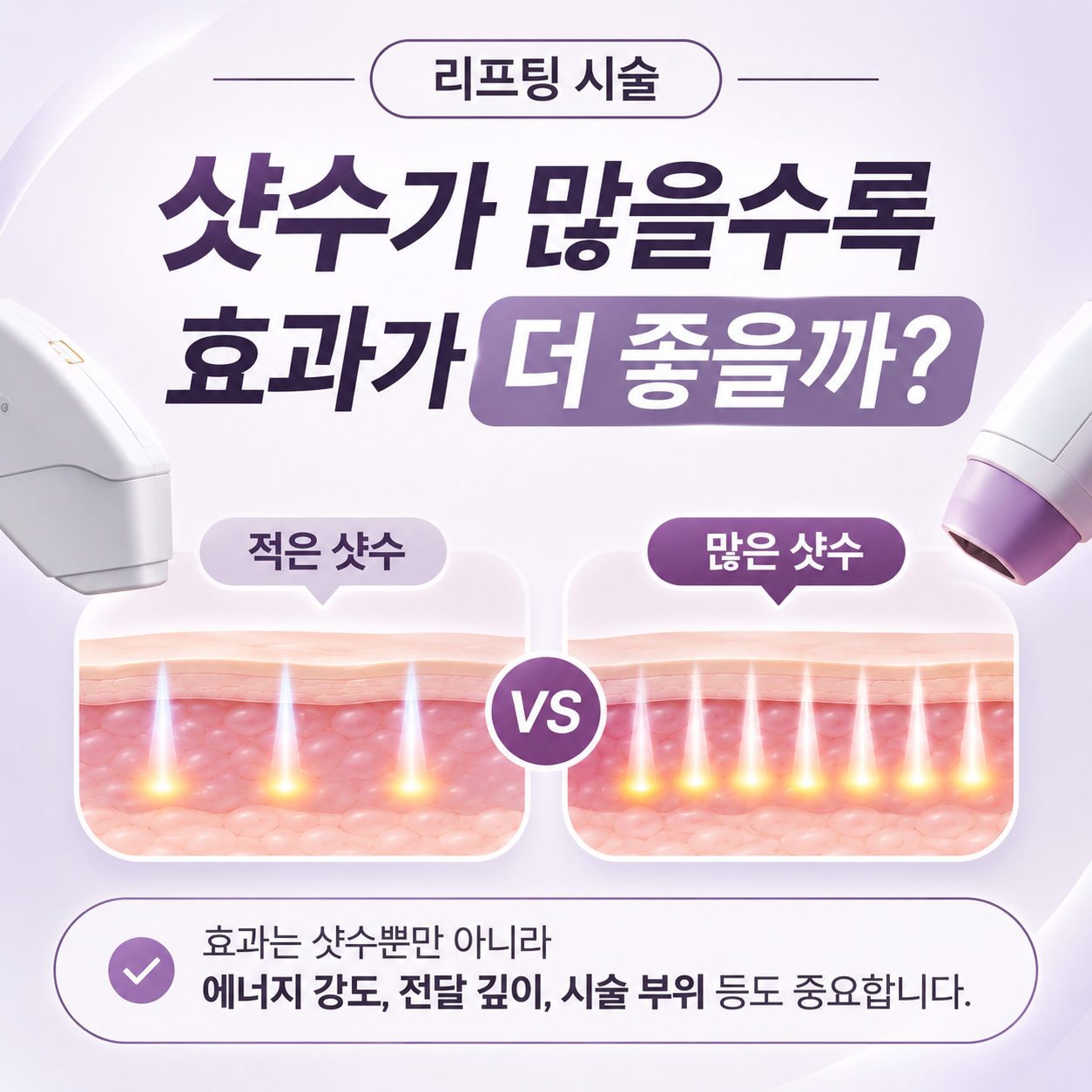
Lifting
What Are the Differences Between EXION and POTENZA?
Both EXION and POTENZA utilize microneedle radiofrequency, but they differ in their energy control methods and treatment tip configurations. EXION features AI Pulse Control and Extended Mode, while POTENZA is characterized by its wide range of RF modes and diverse treatment tips. It cannot be uniformly determined which device is superior; making an appropriate choice based on individual skin conditions and treatment goals is essential.
Principles of RF Lifting and Treatment Selection Criteria Based on Skin Conditions
EXION and POTENZA are radiofrequency (RF)-based medical devices used to address concerns such as skin elasticity, enlarged pores, fine lines, and skin texture.
Both devices employ a treatment method that delivers radiofrequency energy into the deeper layers of the skin using microneedles.
When RF energy is delivered into skin tissue, heat is generated; this thermal stimulation can induce tissue contraction, natural wound-healing responses, and collagen remodeling.
However, EXION and POTENZA differ in how they control RF energy, the configuration of their treatment tips, and their specific energy delivery characteristics.
Therefore, to understand the differences between the two devices, rather than simply comparing which is more effective, it is important to examine each device's operating principles and determine the appropriate treatment method suited to individual skin conditions.
01. What Is EXION Lifting?
EXION is an energy-based medical device platform developed by BTL.
EXION offers several treatment modalities, among which EXION Fractional RF utilizes microneedles combined with monopolar radiofrequency energy.
By inserting microneedles into the skin and delivering RF energy, it generates thermal energy within the tissue, which can induce collagen remodeling and skin tissue repair responses.
Key Technologies of EXION Fractional RF
① Monopolar RF
Thermal energy is delivered to the skin tissue using a monopolar radiofrequency system.
This thermal stimulation affects skin collagen and surrounding tissue, which over time may induce changes in skin elasticity and texture.
② AI Pulse Control
EXION Fractional RF is engineered to control energy delivery by utilizing information related to the electrical impedance of the skin tissue.
A defining feature is that it adjusts the RF output and pulse parameters during the treatment based on real-time tissue impedance.
However, this automatic control technology does not guarantee identical responses across all skin types, nor does it completely eliminate the risk of adverse effects.
③ Extended Mode
Extended Mode is designed to extend thermal effects deeper into the tissue beyond the physical insertion depth of the microneedles.
This allows the needle insertion depth and the area affected by thermal energy to be configured independently.
However, a deeper energy delivery depth alone does not necessarily make the treatment more effective for all skin concerns.
In clinical practice, skin thickness, fat layer distribution, and the location of the target tissue must be comprehensively considered.
02. What Is POTENZA?
POTENZA is a radiofrequency-based medical device developed by Jeisys Medical.
POTENZA supports both invasive treatments using microneedles and non-invasive treatments delivering energy from the skin surface.
A key feature is its versatility: by utilizing a diverse array of treatment tips and RF modes, energy delivery can be tailored to the specific treatment area and clinical objective.
Key Technologies of POTENZA
① Monopolar and Bipolar RF
POTENZA supports both monopolar and bipolar RF modes.
These two modalities differ in the path through which the electrical current travels and the pattern of heat distribution within the tissue.
Consequently, different RF delivery methods can be selected depending on the depth of the target tissue and the treatment objective.
② 1 MHz and 2 MHz Frequencies
POTENZA is designed to operate at frequencies of both 1 MHz and 2 MHz.
The pattern of thermal energy delivery into the tissue can vary depending on the combination of frequency, RF mode, and treatment tip.
However, a higher frequency does not inherently guarantee superior therapeutic results across all skin types.
③ Diverse Treatment Tips
POTENZA offers a wide range of tip configurations, including insulated, non-insulated, semi-insulated, and non-invasive tips.
Depending on the treatment tip, the number and arrangement of microneedles, as well as the exact depth and layer of energy delivery, can vary.
Additionally, certain tips are designed to assist in the transdermal delivery of topical solutions into the skin.
Available tip configurations may vary depending on the device version and regional regulatory approvals.
03. Key Differences Between EXION and POTENZA
Category | EXION Fractional | POTENZA |
|---|---|---|
Primary Energy | Monopolar RF | Monopolar and Bipolar RF |
Treatment Modality | Microneedle RF | Microneedle and Non-Invasive RF |
Key Technology | AI Pulse Control, Extended Mode | Combinations of Frequency, RF Mode, and Tips |
Energy Regulation | Pulse control based on tissue impedance | Configurable modes and tip-specific energy adjustments |
Technical Characteristic | Thermal delivery engineered beyond needle insertion depth | Broad selection of tips and delivery modalities |
Commonality | Induction of tissue remodeling via thermal stimulation | Induction of tissue remodeling via thermal stimulation |
While both devices deliver heat into tissue to stimulate collagen remodeling, they differ in their range of energy delivery options and underlying control technologies.
EXION highlights energy regulation utilizing real-time tissue impedance feedback alongside its Extended Mode as primary features.
POTENZA is designed to allow customized treatment plans tailored to the target tissue by combining monopolar and bipolar RF modes with a diverse selection of tips.
However, there is insufficient head-to-head clinical evidence to definitively conclude that one device is superior for all skin concerns.
04. Does the Optimal Device Vary Depending on Skin Concerns?
Both EXION and POTENZA can be applied for various clinical objectives depending on the patient's skin condition.
However, having a specific skin concern does not mean only one device is uniquely appropriate.
① Loss of Skin Elasticity and Fine Lines
As intrinsic skin aging progresses, structural alterations in dermal collagen and elastic fibers can lead to reduced skin elasticity and the development of fine lines.
Microneedle RF treatments can be utilized to deliver controlled thermal stimulation to these tissues, promoting collagen remodeling.
Both EXION and POTENZA may be considered for skin elasticity loss and fine lines; actual clinical suitability depends on skin thickness and treatment area extent.
② Enlarged Pores and Uneven Skin Texture
Pores can become enlarged due to various factors, including increased sebum secretion, decreased skin elasticity, and structural characteristics of the hair follicle.
When reduced skin elasticity is an underlying factor, microneedle RF can be considered to encourage collagen remodeling around pore structures.
However, if excessive sebum production is the primary cause, sebum-regulating treatments may be required first.
③ Atrophic Acne Scars
Acne scars develop from tissue loss caused by severe inflammation or fibrous tethering in the dermis.
Microneedle RF treatment may be used to improve certain atrophic scars by promoting tissue repair and collagen remodeling in damaged structures.
Nonetheless, depending on scar type and depth, complementary treatments such as subcision or laser resurfacing may be necessary.
④ Thin Skin or Low Facial Volume
In patients with thin skin and minimal subcutaneous fat, the depth and distribution of thermal energy delivery must be configured with particular caution.
If radiofrequency energy unnecessarily affects the subcutaneous fat layer, it can potentially lead to fat atrophy or unintended changes in facial contour.
Therefore, in such cases, treatment depth, energy intensity, and target placement—beyond just device selection—must be meticulously planned.
05. Do EXION and POTENZA Differ in Pain Levels and Recovery Period?
Both devices can cause pain or a sensation of heat during treatment when microneedles and RF energy are applied.
Post-treatment erythema, swelling, skin irritation, and microscopic crusting may also occur.
Pain levels and the recovery period are influenced by the following factors:
Microneedle insertion depth
RF energy intensity and delivery modality
Treatment area and pulse count/passes
Individual skin thickness and sensitivity
Methods of anesthesia and post-treatment care applied
EXION incorporates automated energy delivery control, while POTENZA features diverse RF modes and treatment tips.
However, these technical differences alone do not guarantee that one specific device consistently results in less pain or faster recovery.
06. When Are the Results from These Devices Typically Noticeable?
Skin changes following microneedle RF treatments can be divided into immediate post-procedure reactions and gradual changes resulting from subsequent collagen remodeling.
Immediately after the procedure, skin may appear temporarily changed due to heat-induced tissue contraction or transient swelling.
In contrast, true collagen remodeling and biological tissue recovery progress gradually over several weeks to months.
Therefore, it is difficult to determine the ultimate clinical outcome solely from immediate post-procedure observations.
The degree and longevity of clinical outcomes can vary depending on individual skin condition, treatment area, energy settings, and session count.
07. Precautions for EXION and POTENZA Treatments
Both devices are medical instruments requiring appropriate treatment planning and stringent safety management.
Following microneedle RF procedures, transient pain, erythema, swelling, and pinpoint bleeding may occur.
Although rare, complications such as burns, infection, pigmentary changes, scarring, fat atrophy, and nerve injury have also been reported.
Notably, regarding RF microneedle devices, the U.S. FDA issued a safety communication in 2025 noting reports of serious tissue damage in certain clinical cases.
Therefore, prior to treatment, a comprehensive consultation must be conducted to assess skin condition, past aesthetic procedure history, and any contraindications.
08. Frequently Asked Questions About EXION and POTENZA
Q1. Which device is more effective, EXION or POTENZA?
While both devices can be utilized for tissue remodeling via radiofrequency, there is insufficient direct comparative evidence to uniformly declare one superior to the other.
The optimal device and treatment parameters will vary depending on individual clinical goals and skin conditions.
Q2. Can EXION and POTENZA treatments be combined?
Because both devices deliver RF thermal energy, any concurrent or sequential treatment must carefully account for cumulative thermal stress and skin recovery status.
Generally, there is no established clinical rationale requiring the simultaneous use of both devices.
Q3. Do EXION and POTENZA require the same number of treatment sessions?
The recommended session count depends not only on the device type, but also on individual skin condition, therapeutic objectives, and the specific modality applied.
Even within microneedle RF treatments, applying a uniform session count across all patients is not medically appropriate.
09. In RF Lifting, a Tailored Treatment Plan Matters More than Device Selection
While EXION and POTENZA share the commonality of using microneedles and RF energy, they differ in RF delivery modes, treatment tips, and energy control technologies.
EXION Fractional RF features energy control based on tissue impedance and Extended Mode, whereas POTENZA offers versatile clinical utility through diverse RF modes and tip combinations.
However, these technological distinctions do not automatically translate to identical clinical outcome differences across every patient.
In RF lifting, what matters most over device superiority is selecting an energy delivery approach that appropriately corresponds to skin thickness, degree of elasticity loss, fat distribution, and desired improvements.
It is necessary to establish an individualized treatment plan following a thorough evaluation of the patient's unique skin condition and tissue characteristics.
Go to TING CLINIC Official Blog
This content is for general medical information and does not replace diagnosis or treatment. Treatment effects and side effects may vary, so consult a medical professional.