Lifting
EXION Lifting Effects: Is 1 Session Enough? Recommended Sessions and Treatment Intervals
While skin changes can be felt after a single EXION treatment, repeated sessions may be considered for sufficient improvement. Overseas manufacturer guidelines for EXION Fractional RF suggest a reference range of 3 to 6 sessions at intervals of 1 to 6 weeks, with collagen remodeling potentially progressing over several months. Rather than simply increasing the number of treatments, what matters most is establishing a treatment plan tailored to your individual skin condition and recovery process.

EXION is used in treatments utilizing microneedles and radiofrequency (RF) energy to induce thermal responses in skin tissues and stimulate collagen remodeling.
When considering EXION treatments to improve decreased skin elasticity, fine lines, or skin texture changes, one of the most common questions is the number of sessions required.
Does EXION lifting show effects after just one session?
Some patients may notice changes in skin texture or elasticity even after a single treatment. However, whether sufficient improvement can be achieved with just one treatment depends on individual skin condition and treatment goals.
In particular, collagen remodeling—one of the primary mechanisms of EXION Fractional RF—is not completed immediately after treatment, but progresses gradually over several weeks to months.
Therefore, when deciding on the number of EXION sessions, it is important to consider not only immediate changes, but also the skin's recovery process and the ultimate degree of improvement desired.
01. What is EXION Lifting?
EXION is an energy-based medical aesthetic platform developed by BTL.
EXION offers various treatment modalities, among which EXION Fractional RF delivers radiofrequency energy into deep skin layers using microneedles.
When microneedles penetrate the skin, radiofrequency energy generates heat in the tissue, and this thermal stimulation triggers collagen denaturation and tissue wound-healing responses.
Subsequently, during the skin's recovery process, remodeling of collagen and elastic fibers can progress.
EXION Fractional RF incorporates AI Pulse Control technology, which modulates energy delivery based on data related to the electrical impedance of the skin tissue.
Additionally, its Extended Mode is designed to deliver thermal effects across an area wider than the physical penetration depth of the microneedles.
However, this technology does not guarantee identical results across all skin conditions, as the actual range of energy delivery varies depending on treatment settings and tissue characteristics.
02. Can EXION Show Results After Just 1 Treatment?
Certain skin changes can be observed even after a single EXION treatment.
Immediately following the procedure, the skin may feel different due to temporary heat-induced tissue contraction or mild swelling.
However, these early changes do not necessarily represent the outcome of long-term collagen remodeling.
The ultimate efficacy of EXION should be evaluated by distinguishing between immediate post-treatment changes and subsequent tissue remodeling.
Because collagen changes within the skin progress gradually, improvements in skin elasticity or texture may become noticeable over time after the procedure.
Furthermore, the extent of changes visible from a single session can vary depending on several factors:
Evaluation Factor | Factors Affecting Results |
|---|---|
Skin elasticity | Baseline status of collagen and elastic fibers |
Skin thickness | Target tissue depth and energy delivery range |
Degree of aging | Extent of fine wrinkles and tissue sagging |
Treatment area | Anatomical differences (forehead, cheeks, jawline, etc.) |
Energy settings | RF intensity and insertion depth |
Treatment goals | Skin texture improvement, fine lines, elasticity, etc. |
Required treatment plans may differ between cases of relatively mild aging and those with pronounced sagging or scarring.
Therefore, determining whether a single session is sufficient should be made after thoroughly evaluating individual skin conditions and treatment goals.
03. Why Consider Repeated Sessions for EXION Lifting?
Microneedle RF treatments like EXION induce tissue healing and remodeling by applying controlled thermal stimulation within the skin.
These internal skin changes do not complete immediately following a single stimulation, but rather unfold over a dedicated recovery period.
Collagen remodeling takes time.
Collagen is a vital structural protein that maintains skin firmness and elasticity.
As aging progresses, changes in collagen volume and architecture can lead to decreased skin elasticity and fine wrinkles.
Microneedle RF energy stimulates new collagen formation through tissue thermal responses and natural healing processes.
However, forming new collagen and reorganizing tissue structures inherently requires time.
In clinical studies on microneedle RF, changes in collagen and skin elasticity were observed over several months following treatment.
Therefore, not feeling dramatic effects within a few days post-treatment does not indicate that the treatment was ineffective.
Required treatment scope varies by skin condition.
The tissue scope requiring correction differs significantly between mild surface unevenness and deeper fine lines or atrophic scars.
When a single session cannot deliver sufficient stimulation to the target tissue, additional sessions may be considered while monitoring the recovery process.
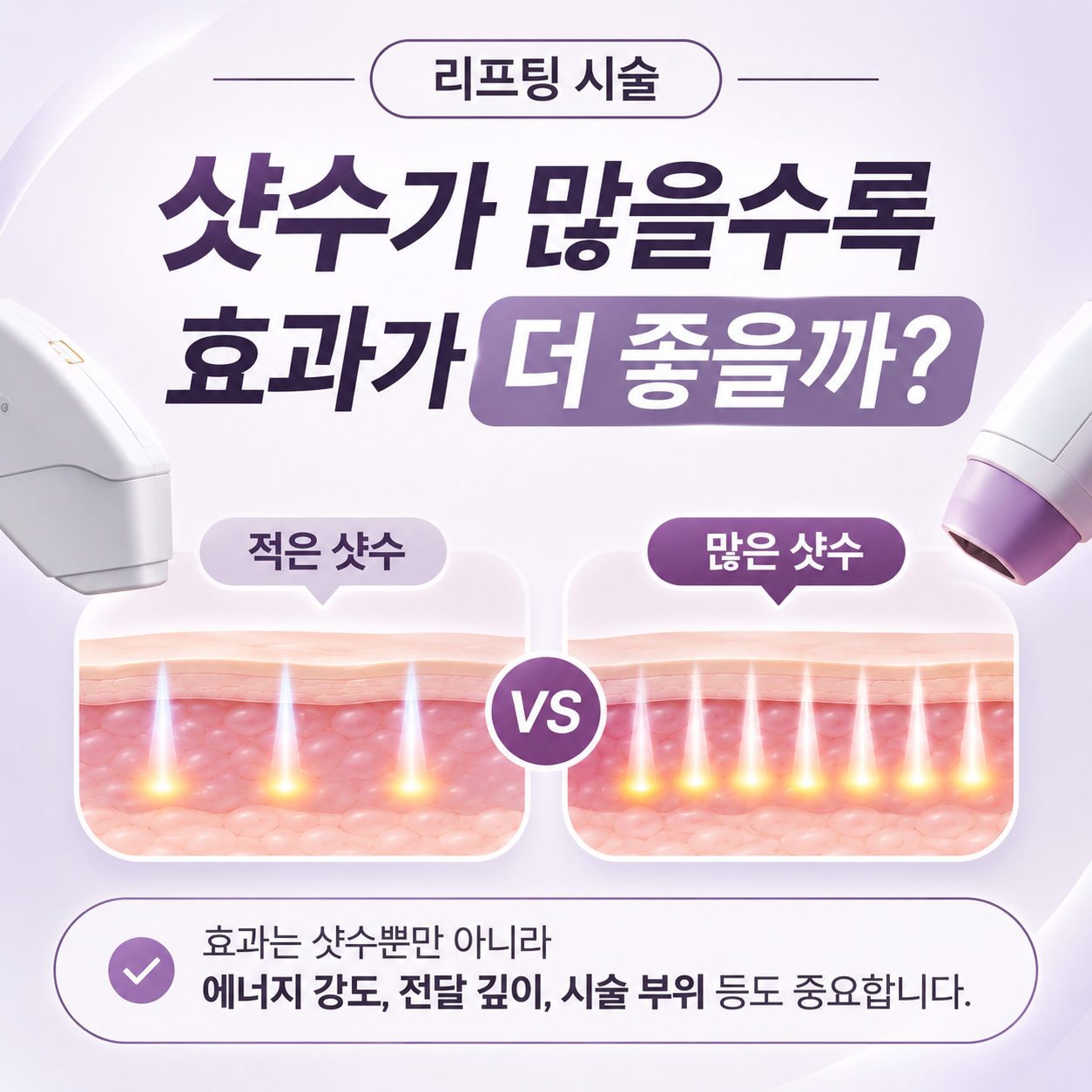
However, treatment efficacy does not increase indefinitely in direct proportion to the number of sessions.
Setting an appropriate treatment volume tailored to specific treatment goals is essential.
An adequate recovery period must be secured.
Microneedle RF treatments work by inducing micro-injuries and thermal stimulation in the skin.
Afterward, the skin undergoes processes including an inflammatory response, tissue healing, and remodeling.
Repeating procedures excessively before the skin has sufficiently recovered can heighten the risk of skin irritation and complications.
Therefore, the decision and timing for additional treatments must be made after confirming the skin's actual recovery status.
04. Recommended Sessions and Treatment Intervals for EXION Lifting
Official overseas guidelines from BTL for EXION Fractional RF suggest a reference range of 3 to 6 sessions at intervals of 1 to 6 weeks, depending on skin condition and treatment goals.
However, this is not a fixed clinical standard that must be applied to every patient.
Other manufacturer materials suggest protocols such as 2 to 5 sessions, meaning actual recommendations may vary based on the specific modality, clinical objectives, and skin recovery rate.
Category | Reference Details |
|---|---|
Single Treatment | Certain skin changes observable |
Repeated Treatments | Considered based on treatment goals |
Number of Sessions | 3 to 6 sessions |
Treatment Interval | 1 to 6 weeks |
Final Evaluation | Account for collagen remodeling progression |
Personalization | Determined by skin condition and recovery status |
05. When Do EXION Results Begin to Appear?
Skin changes following EXION treatment can be understood by separating initial reactions from gradual structural changes.
Immediately Post-Treatment to Early Recovery Period
Immediately following the procedure, temporary redness, swelling, and mild heat sensation may occur.
Some individuals may feel their skin is temporarily firmer; however, this may reflect mild swelling or heat responses and should not be viewed as the definitive outcome.
Several Weeks Post-Treatment
As initial recovery resolves, improvements in skin texture and fine lines may gradually become observable.
However, changes do not necessarily appear at the exact same timeline for every patient.
Several Months Post-Treatment
As collagen remodeling and deep tissue repair continue, further enhancements in skin elasticity and texture can emerge.
Some studies on microneedle RF have confirmed ongoing collagen and elasticity improvements even at 3 to 4 months post-procedure.
However, these findings reflect microneedle RF technology in general and do not imply that EXION alone will yield identical outcomes for every patient.
Evaluating EXION requires assessing both short-term post-treatment responses and the skin condition after a sufficient period has elapsed.
06. What Criteria Determine the Number of Treatments?
The appropriate number of EXION sessions is decided through a comprehensive evaluation of individual skin condition and clinical goals.
Degree of Skin Aging
Treatment approaches may vary significantly between mild fine lines with slight elasticity loss, versus deep folds or pronounced structural sagging.
In cases of severe skin laxity, microneedle RF treatments alone may be limited in achieving desired lifting results.
Skin Thickness and Fat Distribution
When skin is thin or subcutaneous fat is minimal, energy delivery depth and intensity must be adjusted with precision.
If RF energy unnecessarily affects deep structures, adverse events such as localized fat volume loss may occur.
Therefore, indiscriminately using high energy or scheduling frequent repeated sessions is not appropriate.
Specific Skin Concerns Targeted
Treatment objectives differ whether the primary aim is refining skin texture and fine lines, revising atrophic scars, or addressing skin elasticity loss.
Accordingly, differences may arise in the recommended treatment scope and total session count.
Post-Treatment Skin Response
If prolonged erythema, swelling, or skin irritation occurred following a previous session, intervals and energy parameters for subsequent treatments should be re-evaluated.
Decisions regarding additional sessions should prioritize the skin's actual state of recovery rather than rigidly adhering to a pre-set calendar schedule.
07. Do More Frequent EXION Treatments Yield Better Results?
Undergoing EXION treatments frequently does not necessarily lead to superior outcomes.
Because microneedle RF delivers thermal stimulation deep within the skin, tissues require a dedicated recovery period.
Repeating procedures before adequate healing can lead to unnecessary tissue damage.
In particular, excessive thermal energy delivery carries risks of complications such as burns, pigmentary changes, scarring, and fat atrophy.
Therefore, rather than simply increasing treatment frequency, delivering appropriate energy to target tissue and securing an adequate recovery period is essential.
08. Precautions After EXION Treatment
Temporary erythema, swelling, discomfort, and a warm sensation may occur following EXION Fractional RF.
Fine crusts or pinpoint bleeding may develop depending on individual skin condition, and the recovery period exhibits individual differences.
Following treatment, avoid excessive irritation to the skin and follow instructions from your medical team regarding gentle cleansing, moisturizing, and sun protection.
In particular, during the recovery phase, avoid strong friction, aggressive chemical or physical exfoliation, and thermal exposure such as saunas.
Although rare, complications such as infection, burns, hyperpigmentation, scarring, fat atrophy, or nerve damage may occur.
If you experience severe pain, blistering, unusual skin discoloration, sensory alterations, or worsening swelling after treatment, seek prompt evaluation from a medical team.
Additionally, active skin infections, implanted electronic medical devices, and previous cosmetic procedure history must be thoroughly reviewed prior to treatment.
09. Frequently Asked Questions About EXION Lifting
Q1. Can skin elasticity improve after just one EXION session?
Some patients may perceive changes in skin texture or elasticity even after a single session.
However, the degree of improvement varies according to individual skin condition and treatment parameters, and one session may not sufficiently address all skin concerns.
Q2. How many EXION sessions are recommended?
Overseas manufacturer guidelines for EXION Fractional RF provide a reference range of 3 to 6 sessions at intervals of 1 to 6 weeks.
However, this serves as a general guide; the actual number of treatments depends on skin condition, therapeutic objectives, and individual healing rates.
Q3. When are the results of EXION most evident?
While early subtle changes may be noted shortly after treatment, structural changes from collagen remodeling unfold over several weeks to months.
Therefore, evaluating the final improvement requires sufficient observation following the procedure.
Q4. Will repeated EXION treatments make the skin thinner?
Properly performed treatments do not inherently thin the skin.
However, excessive thermal stimulation or inappropriate penetration depth can lead to unwanted tissue injury; therefore, skin thickness and subcutaneous fat levels must be carefully considered.
Q5. When is the decision made for additional EXION treatments?
Decisions are appropriately made after evaluating the results of previous treatments and the patient's skin recovery status.
Rather than unconditionally fulfilling a pre-determined session count, adjusting the clinical plan according to actual skin response and therapeutic goals is essential.
10. For EXION Lifting, an Appropriate Treatment Plan Matters More Than Session Count
EXION utilizes microneedles and radiofrequency energy to induce thermal tissue responses and stimulate collagen remodeling deep within the skin.
While measurable improvements can be noted after a single session, the extent of efficacy and the need for repeated treatments depend on individual skin condition.
Because collagen remodeling inherently requires time, judging final therapeutic outcomes solely on immediate post-procedure changes is difficult.
Moreover, higher numbers of treatments or shorter intervals do not necessarily guarantee superior outcomes.
What matters most in EXION lifting is not mechanically repeating pre-set sessions, but establishing an individualized treatment plan accounting for skin thickness, degree of elasticity loss, aesthetic goals, and tissue recovery rate.
This requires thorough clinical evaluation of skin and soft tissue characteristics, balancing both treatment efficacy and safety.
Go to TING CLINIC Official Blog
This content is for general medical information and does not replace diagnosis or treatment. Treatment effects and side effects may vary, so consult a medical professional.