Booster
How Skin Boosters Work and Produce Effects After Treatment
Skin boosters are not simply treatments that supply nutrients to the skin; depending on the ingredients used, they induce various biological responses within the skin. - Hyaluronic Acid: Moisture retention and skin hydration - PN: Tissue recovery and improvement of the skin regeneration environment - PDRN: Tissue recovery-related signaling and regeneration support - PLLA·PDLLA: Collagen production and skin structural remodeling. Ultimately, the key to skin boosters is selecting the right ingredient for your specific skin concerns and understanding what actions they induce within the skin.
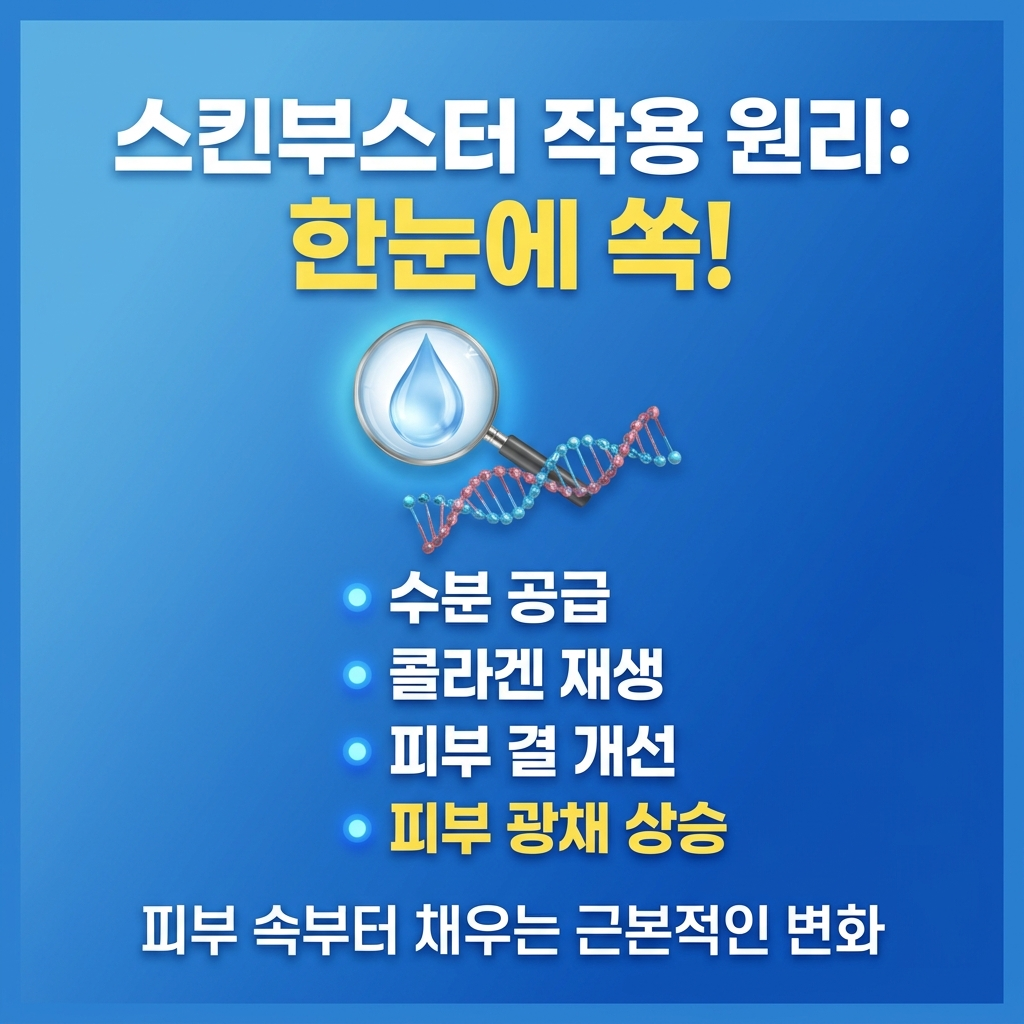
Mechanism of Action After Skin Booster Treatment
Skin boosters are treatments that directly deliver active ingredients into the skin to improve the internal skin environment and help maintain the skin's natural regenerative capacity and healthy state.
Beyond simply supplying moisture to the skin, various actions can be expected depending on the ingredients used, including moisture retention, stimulation of collagen production, skin regeneration, improvement in skin elasticity, and reinforcement of the skin barrier.
The core of skin boosters lies in delivering active ingredients into the interior of the skin rather than the surface, thereby inducing changes in the skin environment.
How Does It Work Within the Skin?
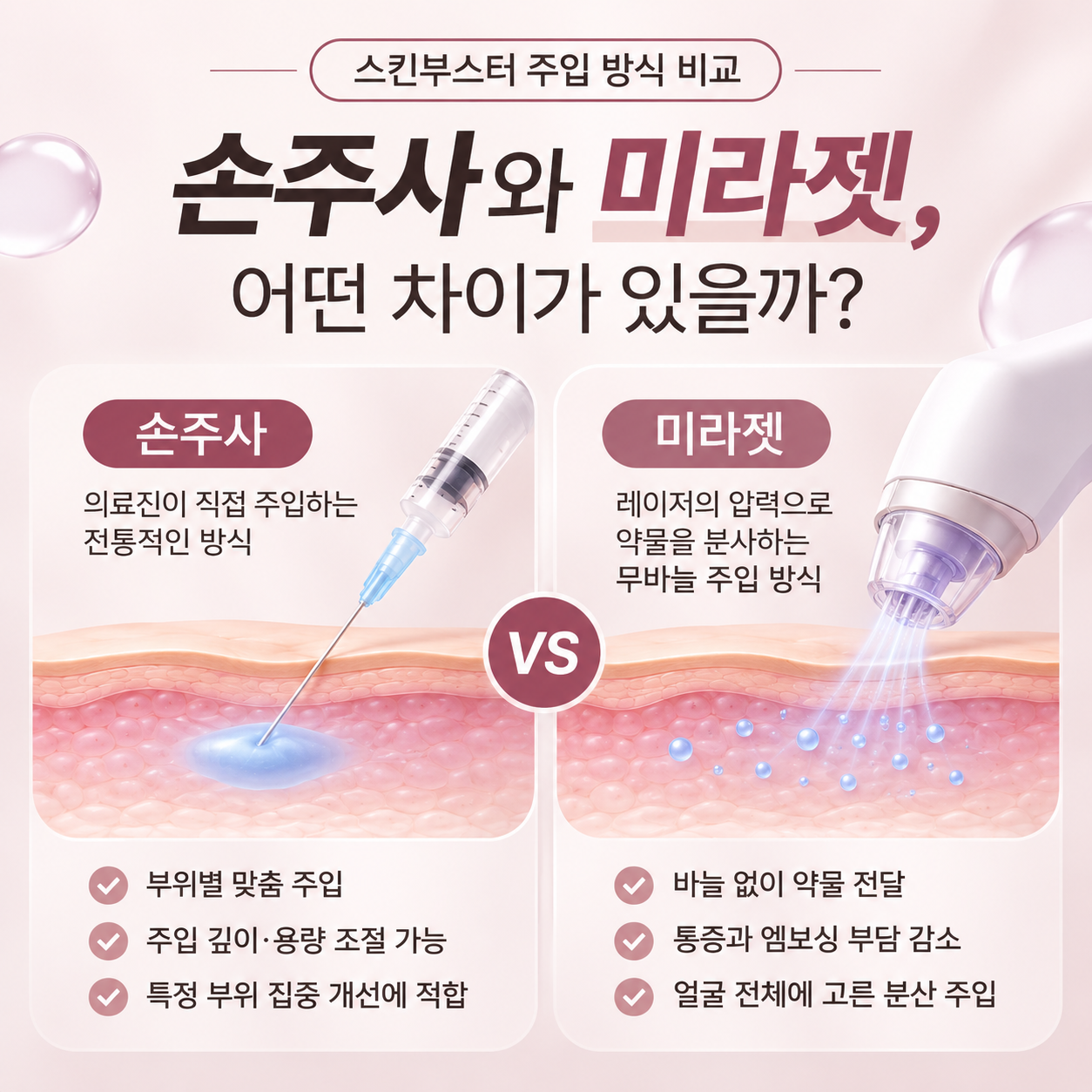
Active Ingredient Delivery: Active ingredients such as hyaluronic acid, PN, and PDRN are delivered into the skin via micro-injections.
Internal Skin Environment Improvement: Depending on the ingredients, they retain moisture or influence the extracellular matrix environment and the activity of skin cells such as fibroblasts.
Regeneration and Collagen-Related Responses: Some ingredients are involved in the generation and restructuring of collagen and the extracellular matrix, which can induce improvement in skin elasticity.
Skin Condition Improvement: Improvements in skin hydration, fine lines, skin texture, and elasticity can be expected. However, results vary depending on product ingredients and individual skin conditions.
Mechanisms of Action by Skin Booster Ingredient
Hyaluronic Acid – Hydration and Moisture Retention
Hyaluronic acid is an ingredient capable of attracting and retaining moisture many times its own weight.
When injected into the dermal layer of the skin, it attracts surrounding moisture to improve the internal hydration environment and helps the skin maintain a moisturized, supple state.
Furthermore, hyaluronic acid influences the extracellular matrix (ECM) within the dermis, which may contribute to fibroblast activity and collagen production.
Moisture retention within the skin
Improvement of dryness and fine lines
Improvement of skin texture and suppleness
Improvement of the environment for skin elasticity
PN – Improvement of the Skin Regeneration Environment
PN is a DNA-derived polynucleotide ingredient known to be involved in tissue recovery and the skin regeneration environment.
When injected into the skin, PN influences signal transduction pathways related to tissue recovery and can induce responses associated with fibroblast activity and extracellular matrix formation.
In particular, pathways related to the adenosine A2A receptor, which is involved in tissue repair and inflammation regulation, are being actively studied.
Improvement of the skin regeneration environment
Improvement of skin texture and fine lines
Help with improving skin elasticity
Support for tissue recovery processes
PDRN – Support for Tissue Recovery and Cellular Regeneration
PDRN is composed of DNA fragments and is involved in biological processes related to tissue repair.
Notably, mechanisms involving adenosine A2A receptor activation and the nucleotide salvage pathway have been studied.
These processes can contribute to tissue repair, angiogenesis, and the regulation of inflammatory responses.
Support for the recovery of damaged tissue
Improvement of the skin regeneration environment
Involvement in regulating inflammatory responses
Help with improving skin condition
Collagen Boosters – Collagen Production and Structural Skin Improvement
Collagen boosters work by stimulating fibroblasts and tissue responses within the skin to induce new collagen formation.
Biostimulatory polymer ingredients such as PLLA and PDLLA are typically used.
Once injected into the skin, these ingredients trigger biological responses within the tissue; subsequent collagen synthesis and extracellular matrix restructuring can lead to expected improvements in skin density and elasticity.
Induction of collagen production
Improvement in skin density
Improvement in skin elasticity
Help with improving skin sagging and fine lines
Changes Observed in the Skin After Treatment
Immediately After Treatment: Delivery of active ingredients, temporary inflammatory response from needle stimulation
Within a Few Days: Initial recovery process, moisture retention and tissue response depending on ingredients
After Several Weeks: Responses related to fibroblasts and extracellular matrix, possible improvement in skin texture
After Several Months: With certain ingredients, collagen remodeling and changes in skin elasticity may gradually appear
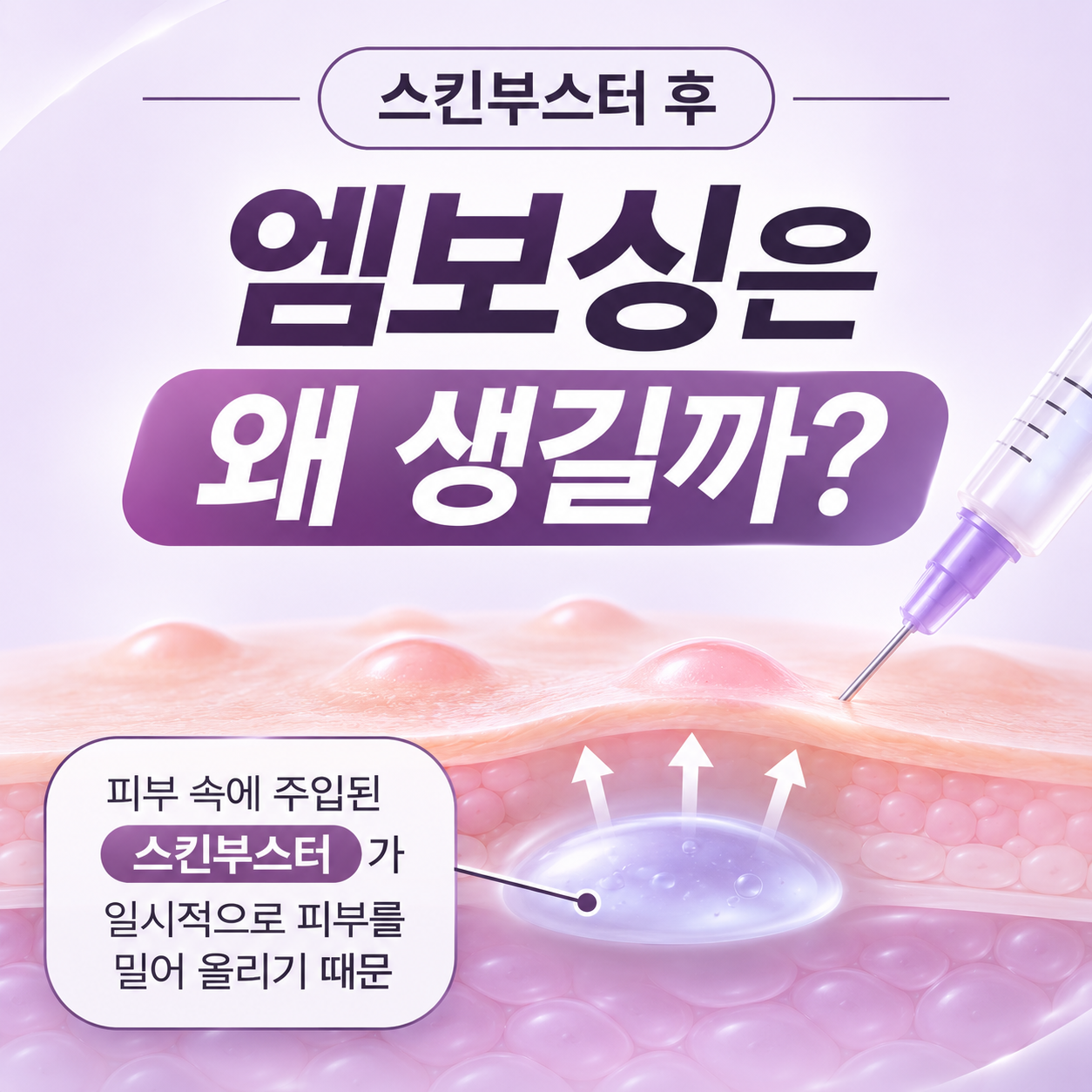
Why Embossing (Papules) Occurs After Skin Booster Treatment
The bumpy appearance that can develop on the skin surface after a skin booster treatment is commonly referred to as embossing.
This is a temporary raised effect on the skin surface caused by the injected solution distributing into the dermal layer in tiny droplets.
The degree of embossing varies depending on factors such as:
Viscosity and physical properties of the injected ingredient
Injection depth and volume
Skin thickness and elasticity
Diffusion and absorption characteristics of the product
In most cases, this is a temporary occurrence that gradually subsides over time.
However, if the embossing persists for an extended period or is accompanied by pain, severe swelling, heat sensation, or changes in skin color, you should consult the treating medical team.
Skin Booster FAQ
Q. Do skin boosters show effects immediately after treatment?
A. While some changes appear relatively quickly, such as the hydrating effect of hyaluronic acid, changes related to collagen remodeling and tissue recovery can take several weeks to months to develop.
Q. Does getting a skin booster unconditionally increase collagen?
A. Not all skin boosters stimulate collagen production in the same way. Depending on the ingredients, some focus on hydration, while others induce collagen production and structural tissue remodeling.
Q. Are PN and PDRN the same ingredient?
A. Both belong to the DNA-derived polynucleotide family, but they differ in molecular weight, composition, characteristics, and product formulations. Therefore, it cannot be concluded that they have identical actions and effects.
Q. What is the difference between skin boosters and dermal fillers?
A. While fillers focus on replenishing lost volume or enhancing facial contours, skin boosters focus on improving overall skin quality, including the internal skin environment, texture, hydration, and elasticity.
Visit TING CLINIC Official Blog
This content is for general medical information and does not replace diagnosis or treatment. Treatment effects and side effects may vary, so consult a medical professional.