Acne & Pores
Primary Causes of Enlarged Pores and Improvement Methods Tailored to Skin Condition (POTENZA)
Pores can become enlarged due to factors such as increased sebum secretion, decreased skin elasticity, hair follicle size, and aging. Microneedling RF treatments such as POTENZA can be utilized to induce collagen remodeling in the skin, helping improve skin texture and elasticity around the pores. Just as important as the size of the pores is identifying the underlying cause and selecting a treatment method appropriate for your skin condition.
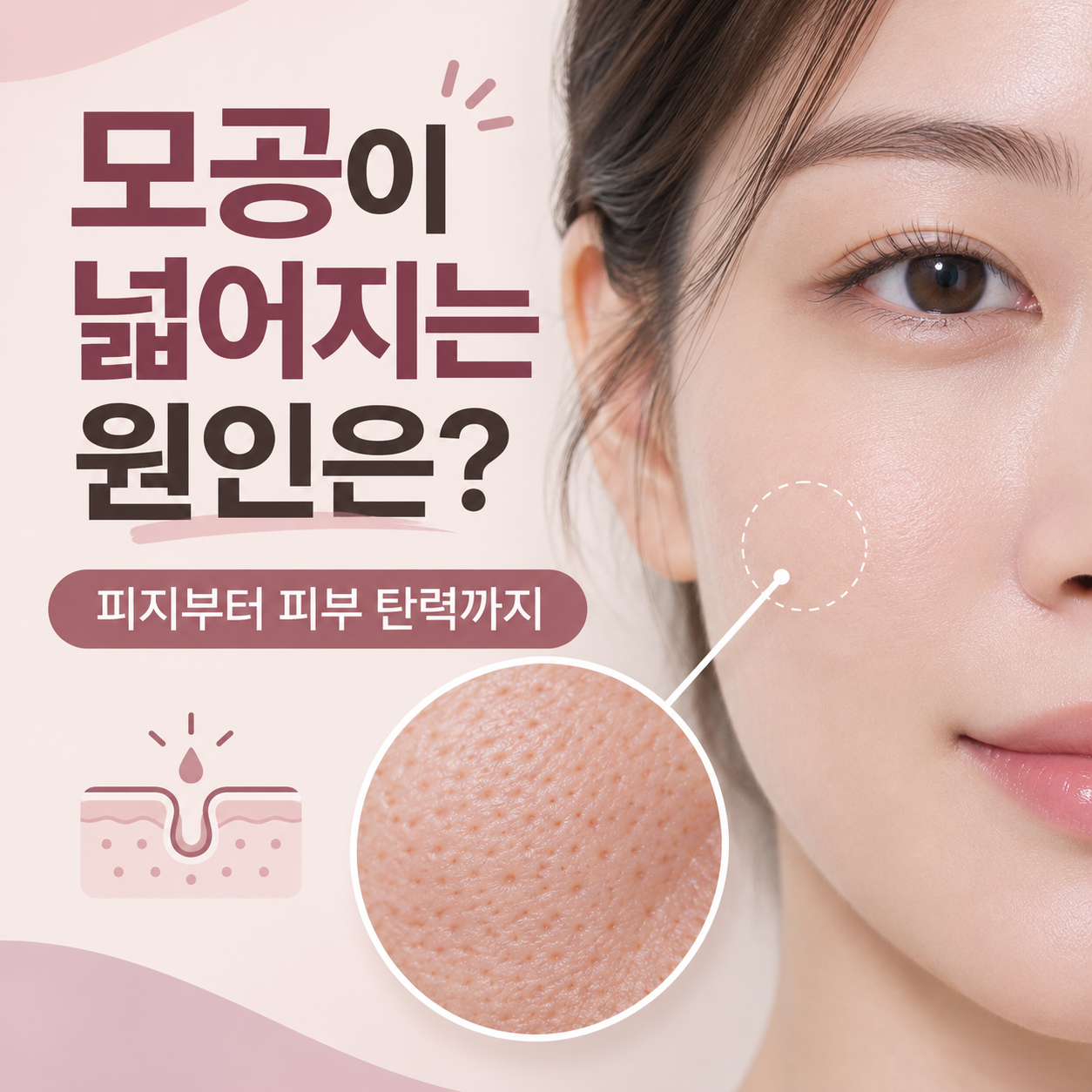
Primary Causes of Pore Enlargement and Improvement Methods Tailored to Skin Condition
Pores are the openings of hair follicles on the skin surface, serving as channels through which sebum and surface impurities are excreted.
Pores are part of normal skin anatomy and are present even in healthy skin. However, when changes occur—such as increased sebum production or reduced skin elasticity—pores may enlarge and become more noticeably visible on the skin's surface.
In particular, pores tend to appear relatively larger in areas with well-developed sebaceous glands, such as the nose, cheeks, and forehead.
Pore enlargement is not simply caused by excess sebum; rather, it is a phenomenon resulting from the complex interplay of multiple factors, including sebum secretion, follicle size, decreased skin elasticity, and aging.
Therefore, to improve pores, it is important to identify the underlying cause of enlargement and select a management method tailored to your skin condition.
01. What is the role of pores?
Pores are structures connected to hair follicles within the skin, serving as channels through which sebum produced by the sebaceous glands is delivered to the skin surface.
Sebum forms a thin lipid barrier on the surface of the skin, helping to inhibit moisture evaporation and protect the skin from external irritants.
Because pores are fundamentally involved in this sebum secretion process, they are not structures that can be completely eliminated or permanently closed.
While phrases like 'closing pores' or 'erasing pores' are commonly used, medically speaking, it is more accurate to describe the goal as improving pore size and the condition of the surrounding skin so that pores appear less prominent.
02. 5 Primary Causes of Enlarged Pores
① Excessive Sebum Secretion
An increase in sebum production is closely related to pore enlargement.
When the amount of sebum produced by the sebaceous glands increases, it can accumulate within the hair follicles, which may cause pores to dilate or become more distinctly noticeable.
In particular, the nose, forehead, and inner cheek areas have relatively well-developed sebaceous glands, making them common sites for noticeable pore dilation.
Sebum secretion levels are influenced by genetic factors, hormonal fluctuations, age, and individual skin conditions.
② Decreased Skin Elasticity
The skin tissue surrounding pores is supported by structural components such as collagen and elastic fibers.
However, as aging progresses and changes occur in these collagen and elastic fibers, structural support around the pores may diminish.
As a result, pore shape may transition from round to oval or vertically elongated configurations.
Vertically sagging pores on the cheek area, in particular, are frequently associated with a decrease in skin elasticity.
Consequently, it can be difficult to achieve sufficient improvement in this type of pore simply by regulating sebum secretion alone.
③ Follicle Size and Genetic Factors
Pore size is also influenced by the inherent structural characteristics of an individual's hair follicles.
In cases where hair follicles are naturally larger or sebaceous glands are genetically well-developed, pores may still appear relatively prominent despite careful skincare habits.
These structural differences are closely tied to genetic factors.
Therefore, realistically, it is difficult to adjust everyone's pores to the exact same size.
④ Clogged Pores from Sebum and Dead Skin Cells
When dead skin cells and sebum accumulate inside hair follicles, comedones can form.
During this process, the pore openings can expand, or pores may appear noticeably more prominent.
Blackheads and whiteheads are representative examples associated with this phenomenon.
However, the presence of blackheads does not necessarily mean pores are permanently enlarged.
Because ongoing clogging or recurrent inflammation can affect the surrounding tissue of the follicles, proper management is necessary.
⑤ UV Exposure and Skin Aging
Prolonged exposure to ultraviolet rays affects the skin's collagen and elastic fibers, which can accelerate photoaging.
As the skin's structural support diminishes, elasticity in the tissue surrounding pores decreases, making them appear wider.
Therefore, pore management requires not only sebum control, but also UV protection and skin anti-aging care.
03. Can pores be categorized by their appearance?
Pores present with varying characteristics depending on their underlying causes and skin conditions.
Pore Type | Key Characteristics | Related Factors |
|---|---|---|
Sebaceous Pores | Prominent mainly on the nose and forehead | Increased sebum secretion |
Elasticity-Loss Pores | Vertically elongated or sagging shape | Decreased collagen and elasticity |
Clogged Pores | Accompanied by blackheads and whiteheads | Accumulation of sebum and dead skin cells |
Combination Pores | Combined excess sebum and loss of elasticity | Multifactorial skin changes |
This is a practical classification designed to help understand pore characteristics and does not constitute a separate, formal medical diagnosis.
Additionally, while enlarged pores and atrophic acne scars may look similar, their causes and treatment approaches differ.
04. What treatments are needed to improve pores?
For pore improvement, treatment directions must be established according to the underlying cause.
When sebum secretion is high
Management aimed at reducing excess sebum production and preventing pore congestion is prioritized.
Depending on the skin condition, treatments utilizing ingredients such as retinoids or salicylic acid, as well as proper sebum management, can be beneficial.
When skin elasticity has decreased
If weakened structural support around the pores is the main factor, treatments that induce collagen remodeling can be considered.
When clogged pores and acne are present together
It is important to manage not only the pore size itself, but also the root causes of comedones and acne lesions simultaneously.
When skin texture is uneven
If enlarged pores and atrophic scars coexist, the structural state of the skin surface must be thoroughly evaluated before deciding on a treatment modality.
05. What is the mechanism by which POTENZA is used for pore improvement?
POTENZA is a medical device that utilizes microneedles and radiofrequency (RF) energy.
It works by inserting microneedles into the skin and delivering RF energy to generate heat within the tissue.
This thermal stimulation can stimulate the tissue's natural healing process and induce collagen remodeling.
When reduced elasticity around the pores is a contributing factor, microneedling RF treatments such as POTENZA can be considered to support structural skin improvement.
POTENZA's Primary Mechanism of Action
Accesses skin tissue at targeted depths using microneedles.
Delivers RF energy to generate controlled heat within the tissue.
The tissue progresses through a natural healing response to thermal stimulation and micro-injuries.
Helps induce changes in skin texture and elasticity through collagen remodeling.
With POTENZA, energy delivery characteristics vary depending on the selected tip type and parameters.
Therefore, treatment plans must be formulated taking into account the causes of pore enlargement, skin thickness, and the treatment area.
However, POTENZA should not be expected to improve all types of pores or permanently eliminate/shrink pores.
06. For which skin conditions can POTENZA treatment be considered?
POTENZA may be considered as a treatment option for the following skin conditions:
When skin elasticity around the pores is diminished
When pores on the cheeks appear stretched or sagging
When uneven skin texture accompanies enlarged pores
When fine lines and decreased skin elasticity are concurrently present
When certain atrophic acne scars are present alongside pores
However, if excessive sebum secretion is the primary cause, other sebum-controlling treatments may be required first.
In particular, if inflammatory acne or active skin infections are present, those conditions must be medically evaluated first.
07. Expected Changes and Potential Side Effects Following POTENZA Treatment
After microneedling RF treatments such as POTENZA, temporary redness, swelling, warmth, and pain may occur.
Minor bleeding or scabbing can appear in the treatment area, and the recovery period may vary depending on individual skin conditions.
Although rare, complications such as burns, pigmentation, scarring, infection, fat atrophy, and nerve damage have been reported.
Particularly when skin is thin or subcutaneous fat is minimal, treatment depth and energy settings must be decided with extra caution.
If severe pain, blistering, skin discoloration, or progressively worsening swelling occurs after treatment, clinical evaluation by a medical team is required.
08. Everyday Home Care Tips for Pore Management
Because pores are normal skin structures, rather than aiming to erase them completely, it is important to minimize factors that exacerbate their dilation.
① Avoid excessive cleansing.
Scrubbing the skin vigorously or washing the face too frequently can damage the skin barrier.
② Perform exfoliation suitable for your skin type.
If your skin is prone to clogged pores, appropriate exfoliation may help; however, aggressive over-exfoliation can induce skin irritation.
③ Use sunscreen diligently.
Because UV-induced photoaging directly impairs skin elasticity, reliable sun protection is an essential management step.
④ Do not squeeze blackheads forcefully.
Repetitive mechanical pressure can traumatize surrounding tissue, making gentle, tailored management necessary.
⑤ Balance skin hydration and oil levels.
Dry skin does not automatically trigger an increase in sebum, but maintaining an intact skin barrier and proper hydration helps support overall skin health.
Go to TING CLINIC Official Blog
This content is for general medical information and does not replace diagnosis or treatment. Treatment effects and side effects may vary, so consult a medical professional.